


Why Your Car Overheats and What to Do Right Away
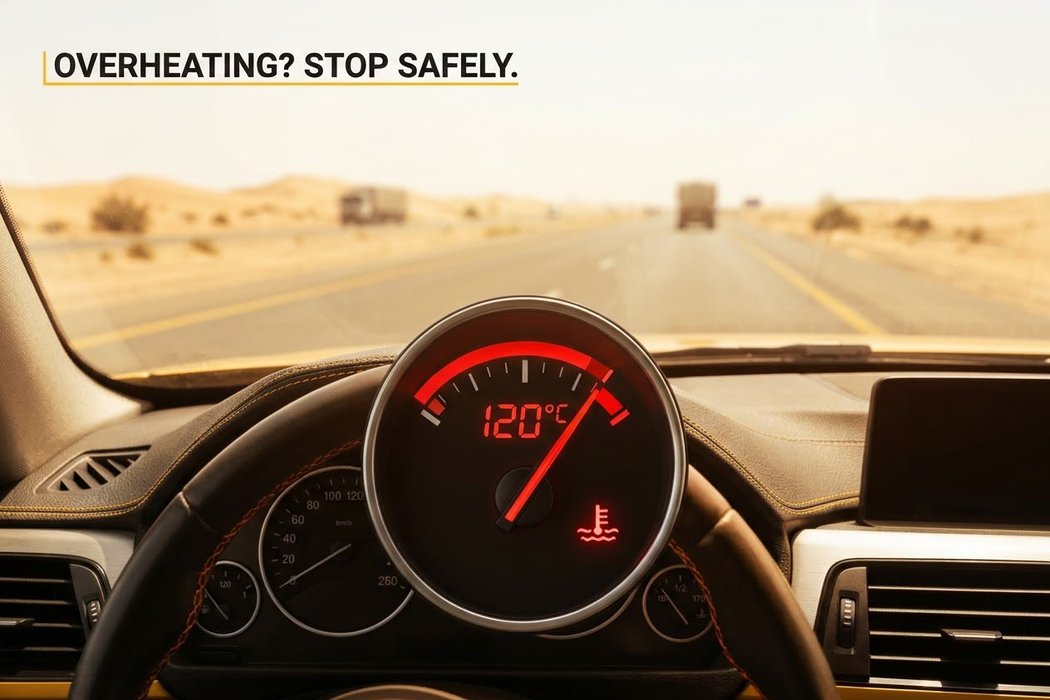
In short: if the temperature gauge rises, switch off the AC, pull over somewhere safe, and never open the radiator cap while the engine is hot. The usual causes are low coolant, a faulty radiator fan, the thermostat, or low engine oil.
Why cars overheat
- Low coolant or a leak: the most common cause. Look for drips under the car.
- The radiator fan isn't working: the temperature rises when idling or in traffic and drops once you're moving.
- Thermostat or water pump: they stop coolant flowing through the engine.
- A blocked radiator: from dust and deposits.
- Low engine oil: oil helps cool the engine, and old oil makes it run hotter.
- AC and climbing hills in summer: both add load, which exposes any weakness in the cooling system.
What to do when your car overheats
- Switch off the AC and turn the heater to full to draw heat away from the engine
- Pull over somewhere safe and switch off the engine
- Wait at least 30 minutes before opening the radiator cap
- Don't keep driving with the gauge in the red, as it can damage the engine
FAQ
- Why does my car overheat with the AC on? The AC adds load to the engine and the fan, which exposes low coolant or a weak fan.
- Why does it overheat only when stopped? Usually the radiator fan, since moving air cools the engine while you drive.
- Can I put plain water in the radiator? Only in an emergency. Replace it with the right coolant for your car afterwards.
Protect your engine before summer: oil change with Shell and Valvoline at all our branches, and an AC check in Jeddah, Riyadh (Khurais), Al Khobar/Dammam and Khamis Mushait. Find your nearest branch